Hardest Part About Saving Hip Hop Isn’t White Media—It’s Black Elders Repeating Lies While We Fight To Rebuild From The Ashes
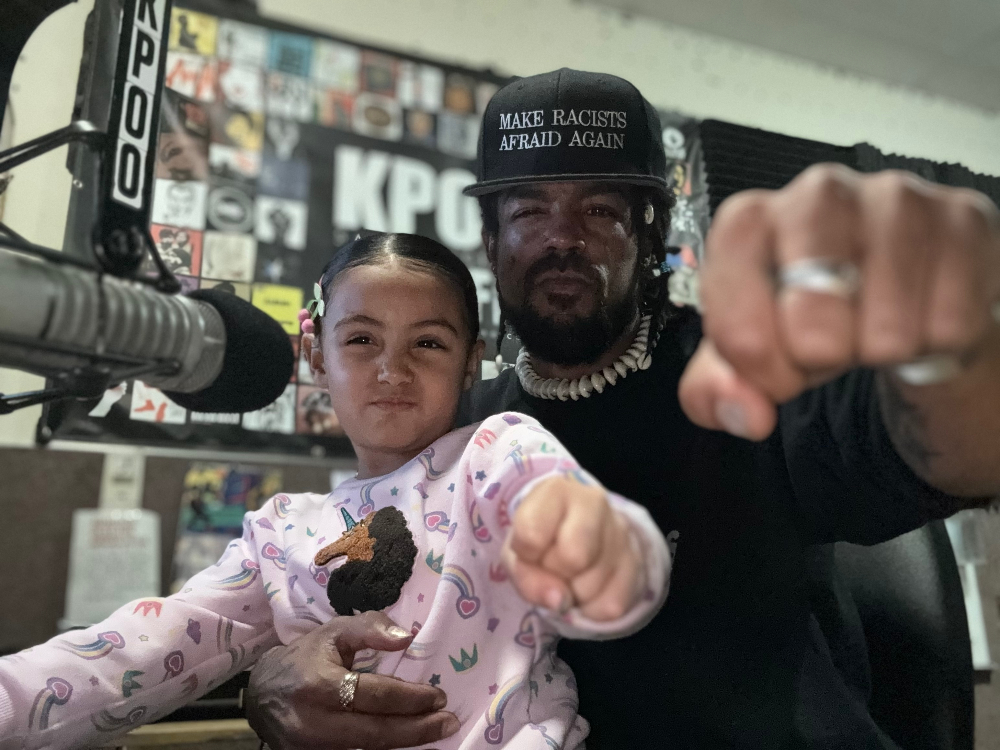
The worst part of trying to reclaim Hip Hop is the constant jabs I get from elders. Not because I don’t respect them. Because I do. It’s because I can hear, in some of those jabs, the echo of a country that has spent decades teaching Black folks to look at our own genius through a white corporate lens—then call the distortion “truth.”
I saw it again on LinkedIn this week when I posted about Flow Lounge in Berkeley—our weekly, social-justice rap writing contest—inviting the “professional community” to stop consuming Hip Hop like it’s a documentary and come see it in real life. I named the corporate control of our imagery. I named the lack of space. I named the theft.
An elder responded:
“Hip hop culture has also done its fair share of damage.”
Then they posted Dr. Frances Cress Welsing:

That comment hit because it wasn’t a thought. It was a blow. It was the sound of somebody handing me another boulder to carry, while I’m already climbing to the mountain top with a whole damn community on my back. For two and a half years, I’ve worked seven days a week trying to pull Hip Hop out of corporate captivity and back into its rightful home: a living culture of self-determination, discipline, truth-telling, and care. I’m not talking about branding. I’m talking about rooms. Stages. Paid gigs. A weekly platform where people can put their pain into language instead of putting it into the streets.
And then an elder responds with knee-jerk disapproval—like the caricature corporations sold is the culture itself. It slices me up inside. Because it’s lonely work to build something this necessary in a system that expects Black leaders to run on these fumes of performative support and call it “passion.” When that disapproval comes from our own, it doesn’t just hurt my feelings. It costs time. It costs momentum. It costs impact. It costs the days I should be spending with my daughter, instead of grinding nonstop just to keep the mission alive. I imagine that if these elders supported this infrastructure the way they continually critique the white media's imagery, this would all be so much easier. The load would lighten. The lives saved would increase. And I could finally take a real day off without the whole thing threatening to fall apart.
Hip Hop Didn’t Do This, Gramps, and You of All People, Should Know That.
Every generation of Black youth builds a culture to survive the world as it is. And every generation of Black elders says they “know how this country works”—then repeats white media talking points like they’re gospel.
That’s what makes it so unforgivable. You should know better. You’ve watched this country do it to us on loop: take what Black youth create, strip it of context, spotlight the worst fragments, and sell the distortion to white consumers with more money—then point back at us and say, “See? Look what your kids are doing.” And too many elders—out of fear, respectability politics, and that old Du Bois “double-consciousness” trap of seeing ourselves through hostile eyes—They end up policing the kids out of their own power, instead of helping build the scaffolding that could hold their gifts—and keep them tethered to their roots.
So when an elder says they “hate rap because of the violence and misogyny,” it lands like a sharp, unnecessary pain—not because I’m fragile, but because I’m already carrying too much. I’m trying to pull something sacred out of corporate captivity with my bare hands, and then I turn around and get scolded by people who should understand exactly how this country operates. That’s the part folks don’t see: the herculean lift isn’t just fundraising and logistics. It’s the emotional labor of building a room with one hand while swatting away shame with the other. And when your own elders add to the pile, it doesn’t make you “better.” It just makes you fucking tired.
No Rooms, No Mentors, No Mercy
This is a moment for our community—especially our elders—to show up with protection, not policing. When a city makes it impossible for Black youth culture to gather, practice, and pass down craft, the rooms disappear, the mentorship chain snaps, and the culture doesn’t “move on.” It gets starved.
In the Bay, we didn’t just “lose a scene.” We lost infrastructure: open mics, weekly nights, and small stages where you learn the finer points of emceeing—breath, timing, presence, discipline, how to hold a room, how to lose with dignity, how to come back sharper. Before the pandemic, those spaces were already being priced out and regulated out of existence. The pandemic didn’t start the collapse—it finished it.
And the cost lands on the younger generation first. Too many artists are coming up without consistent spaces to meet mentors, get corrected with love, or be sharpened by community. They’re left to learn from algorithms and isolation—where gimmicks travel farther than craft, and where “going viral” replaces being good. For a few, that’s survivable. For most, it’s a lonely mess.
Now imagine—just imagine—if all that elder disapproval turned into actual support for our community. Imagine what could be built, how many lives could be steadied, how many dreams could be dreamed, and how many more days I could spend with my daughter, not so exhausted. That’s why I’m asking people to back the infrastructure I'm building here in the Bay Area.
This isn’t burnout. It’s what Black-led infrastructure looks like when the “benefit of the doubt” is reserved for white folks.
I’ve been running this like a seven-day-a-week operation for two and a half years straight—not “busy,” not “booked,” but locked in because Black-led infrastructure doesn’t get grace. I haven’t had a real day off—a literal calendar day I can count on—because the work doesn’t pause just because my body asks for mercy.
Here’s the cadence when you’re building Black self-determination in a city that loves Black culture but starves Black institutions:
Mondays: office day (ops, partnerships, cleanup, follow-ups)
Tues-Sat: grassroots fundraising with my staff, face-to-face, often in wealthy neighborhoods
Sundays: radio show
Every day: making sure this doesn’t collapse back into “good idea, no infrastructure.”
Last year, in our second year of business, we brought in a little over $350,000—and I paid myself far below a sustainable wage because I’ve never had the luxury of white-led ventures getting the benefit of the doubt. The data says what we already know in our bones—Black-led organizations tend to have smaller revenues and dramatically less unrestricted cushion (the “trust money”) than comparable white-led peers. That white supremacy doesn’t just deny capital, it demands Black leaders perform exhaustion as proof.
Now the math. Right now, we have 352 monthly donors giving $6,195.14. We need that above $10,000/month to pop. Flow Lounge alone costs about $4,000/month, and I carried that before monthly donors even existed. $10K/month is what supports two Flow Lounges (Berkeley and San Francisco), strengthens the cultural lineup for SF Pregnancy Family Village, stabilizes our grassroots staff, and raises my pay to something sustainable, so the whole operation isn’t balanced on one person’s spine.
We’re looking to open Flow Lounge in the Mission or SOMA, ideally Tuesday or Thursday—not as a “vibe,” but as a rebuilding of what this city has been stripping away for years: real rooms where Hip Hop craft can live.
You Don’t Get to Take From Us and Stay Innocent.
To Black folks—and especially our elders: stop repeating the corporate script. If you want to criticize something, aim your fire where it belongs: at the white demand for stereotypes, the executives, platforms, and gatekeepers who turned degradation into a revenue model. At the algorithms that reward the worst and bury the rest. The system that will bankroll a caricature before it will ever fund a community room.
And upon your awakening, for the love of God, don’t just stand at the entrance of Black self-determination, watching us work ourselves ragged building the alternative. Pick up a damn shovel and help if you can!
To everyone who has ever benefited from the culture they are not a part of: you don’t get to keep taking and call it love. If Hip Hop got you through a hard season—if it gave you confidence, language, identity, community, a brand, a career, a soundtrack to your life—then it’s time to pay it back. Not to corporations. Not to platforms that profit off proximity. To the infrastructure. To the rooms. To the organizations building the future.
So here’s what to do if you can and are willing—simple and concrete:
Follow us on Instagram (and actually watch what the building looks like) @HipHopForTheFutureSPC.
Become a monthly donor: $20–$30/month at www.HipHopForTheFuture.org.
And one last thing, since we’re telling the truth: if you’ve never been to a Hip Hop show put on by people of the culture—if your entire understanding of Hip Hop comes through white media channels, and white corporations trying to sell tickets—you are part of this problem. That lens didn’t just misinform you; it trained you. Unpack it. Show up differently. And support the people doing the real work. We hope to see you at Flow Lounge soon.
One last shot . . . Less than 0.5% of our subscribers are backing this Black Organization with monthly support. Please consider contributing if you believe in supporting Black labor and want to see our work thrive. Your financial contribution, no matter how small, makes a massive impact on our community. Every dollar makes a difference in keeping this Culture unapologetically alive.
Become a monthly supporter here: https://www.hiphopforthefuture.org/donate


Hip-hop was never about skin color. It was about music. That only started in the activist movement from 2Pacs era. People don't even remember that the first ever rap group "Sugar Hill Gang" was a light skinned dude. People don't even remember The Beasty Boys and White Hip-hop dance era. I don't think that its fair that white people get pushed out of hip-hop when black people just don't exist in hip-hop anymore. Drake, Kanye and Kendrick Lamar and even Jay-Z are considered white people anyway. So the real question is weather or not black people even exist in the world of hip-hop to begin with. Because its a sin for a white person to say Nxgga. But its ok…
Please do yourself a favor and get on the Venture Black mailing list. The next venture conference is coming up at the end of March, and the last one featured a bunch of folks from out of town - I say that to say, they don't just focus on Black-owned businesses in Seattle or even in tech in general.
I'd really like to see you get funded and I'm happy to make a warm intro to Evan if you like.
https://www.venture-black.org/
Conscious HipHop requires an outlet … it is a lineage of story telling and news casting of people’s truth needing to be heard…
HipHop saved my life back in the day.
I’m a white Jewish 70 year old female who pledges a monthly donation.
Giving thanks for all the efforts, creativity and supporting those who have the desire who are on fire. One love