A Hit-Piece Called My Work Harassment: When Black Activism Doesn’t Cater to White Fragility, they Gotta Call it a Scam
- Khafre James
- 14 hours ago
- 18 min read

Picture this: I’m in the middle of an interview about my work, when my interviewer mentions an article about my organization that had recently been published. They told me it was from the New York Post.
That stopped me for a moment.
Not because criticism scares me. It never has. But because I had never even heard about the piece.
As I began looking through the article, I quickly recognized that familiar tone—the coded kind that builds a story about you before it even tries to understand you. I started laughing almost immediately. And when I saw the photos scattered throughout the piece—crispy iPhone screenshots taken from that all-too-familiar mid-shot Karen cellphone angle we’ve grown used to seeing pointed at us on the street—I laughed even harder. Not a polite chuckle. A full laugh.
Then I thought about something I’ve learned after fifteen years of organizing: nobody can work as hard trying to tear down what I’m building as I can work to build it. When you spend your life creating something out of almost nothing, criticism doesn’t scare you. If anything, it confirms that the work has become visible enough to warrant someone’s attention.
After thinking about it for a second, I realized I might actually remember the interaction that inspired the story. Not long ago, a white lady who's a freelance consumer finance writer and reporter named Erica Sandberg approached my team and me in the Fillmore. She came up with a strange, hostile energy, immediately asking whom I worked for while scanning me and my binder, as if she were gathering information. Something about the interaction felt off to me, so I told her I work for myself—this is my business—and that I would be happy to explain what we do if she had two minutes to listen.
She said she didn’t want to hear about it. She just wanted to know who I worked for.
I’ve been here before. I’ve seen the damage certain Karens can create. So I told her I don’t explain my work to hostile white people who aren’t willing to listen because that can be unsafe for Black organizers in the current political climate. She didn’t like that at all, and it started coming out of her. She started accusing us of harassing people, calling our work racist, and saying she was a journalist. I asked her to leave us alone so we could continue working, but at this point, Karen was on a mission. She started berating my employees, heckling people we were trying to stop, threatening to stay all day, and calling the police. I pulled out my phone for safety and recorded part of the interaction. At the very least, I'm going to get follows out of this. Here's the video in question:
But the truth of my work doesn’t happen in a newsroom or on Instagram.
It happens on sidewalks, far from home. In communities where most parents clutch their children a little tighter when they walk past me.
Apparently, Asking About Dead Black Women Is Harassment Now
That history of The Fillmore sits quietly beneath the pavement when I stand there holding a binder and asking 80% White strangers a question that shouldn’t be controversial: Do you care about Black women dying in childbirth?
Almost everyone says yes.
Then I ask the follow-up: Do you care enough to spend two minutes so we can actually stop it?
The responses are revealing. Some people stop and listen. Some nod sympathetically and keep walking. Some pretend they didn’t hear the question at all. Parents occasionally pull their children closer or step into the street before we can finish the sentence. I’ve watched people clamp their hands over their children’s ears, looking disgusted that I would mention something like Black women dying in childbirth in front of a child the same age as my daughter, who already knows these things. I’ve also seen parents trigger a kind of fight-or-flight reaction in their toddlers in real time—teaching them, with nothing but body language, that I am a threat. And sometimes people yell, accusing us of harassment or race-baiting simply for asking a question about the lives of Black women.
If you stand on that corner long enough, the veneer of liberalism fades quickly. The same city that celebrates its progressive identity often reacts to a Black organizer asking for two minutes as if something deeply inappropriate has occurred. The contradiction hangs in the air between each successful conversation, for eight hours a day.

A Wealth Redistribution Officer speaking about our work in San Francisco
Eight Hours, Thirty Conversations, and No Time for Performative Allyship
Every canvassing shift we run is 10 to 6:00 p.m.. Eight hours standing in public spaces, from Danville to Palo Alto, explaining why Black communities and Black culture still require infrastructure, support, and advocacy. Eight hours navigating curiosity, hostility, generosity, projection, and occasionally real solidarity.
Each worker costs the organization roughly $200 in wages for that shift. If we don’t raise more than that, the organization loses money. If we do the job well, we fund artists, public health outreach, education programs, and the last weekly Hip Hop cypher space left in the Bay Area.
That eight-hour window forces a level of discipline that many critics misunderstand. On an average day, only about thirty people out of hundreds will actually stop long enough to hear us out. That means every interaction matters, and every second I have to optimize for both performance and emotional safety. If I spend ten minutes arguing with someone who already decided they don’t care, I’ve wasted the little time I have on inconsequential conversations, while other potential supporters walk by.
Sometimes I call out loudly that I’m looking for “well-meaning white people.” People often assume I say things like this because I enjoy making white folks uncomfortable. I’ll admit there’s a bit of truth in that—but the purpose is safety. When someone hears that phrase and smiles in response, I immediately know they’re probably safe to approach. I’ll say, “Oh great, you seem really cool—come talk to me about Black women dying in childbirth.” Those are usually the people who end up hearing us out.
Most people respond very differently, though. A heartbreaking number of people, in fact. They stiffen up, pretend they didn’t hear me, or get angry. So, before they get close, I already know something important: they probably aren’t safe and not worth the emotional investment required to have a meaningful conversation. In eight hours, you learn to read those signals quickly.
It’s the disciplined strategy these people call harassment.
What It Actually Takes to Be a Black Organizer in Wealthy Spaces for Eight Hours

Khafre speaking to an officer called to respond to reports that we were being aggressive.
The environments where we work often add another layer of complexity. When we canvass in mostly rich white suburbs like Lafayette or Danville, the police get called almost every time we set up. Sometimes officers arrive suspiciously. Most of the time, they arrive already familiar with our work, explaining to whoever complained that we’re protected by the First Amendment and the California Constitution.
Those encounters reveal a strange reality. Many of the officers who arrive go on to express support once they understand what we’re actually doing. Over the years, I’ve received hundreds of 911 calls describing us as “aggressive Black men,” as if simply standing on a sidewalk speaking unapologetically about Black lives in the whitest suburbs is somehow against the law. I’ve had officers approach me, saying they received reports that I was “following a white woman around screaming at them,” only to slowly realize the lies and the prejudice that shaped the call in the first place.
A few officers have even cracked jokes once they see the reality, asking sarcastically if I’d been “harassing all the white women today,” laughing with me before telling me to stay safe. Meanwhile, the people calling the police are usually just uncomfortable seeing a Black activist speaking plainly about race and calling out apathy. And I won’t lie—there’s a particular satisfaction when those same officers leave shaking my hand, because in that moment it becomes clear that I’m not going anywhere. Just like I told Karen.
I’ve been called the n-word. I’ve been told I’m in the wrong town. I’ve been warned not to show up on certain days because of right-wing rallies. At the same time, I told those people I would see them once a month until it was the right time, and I'm going to plan my day to coincide with that rally as well. I shall not be moved like a tree standing by the water

The Three Stages of Karening
What It Takes to Turn Unapologetic Blackness Into an Empowering, Scalable Model
The biggest challenge isn’t just enduring those moments—it’s teaching someone else how to endure them too. Building a grassroots organization means replicating yourself, training new organizers to step into the same environments, face the same hostility, and still do the work without letting it destroy them emotionally.
Creating an unapologetic kind of organization requires far more than passion. It requires engineering a system capable of turning unapologetic Black activism into something teachable, repeatable, and durable enough for a team of organizers to carry forward. From the outside, some people imagine what we do is just emotional—an angry man with a microphone, yelling about injustice. In reality, what they’re seeing is the result of years of deliberate design. I've built an orientation and training structure that tells the truth about what our organizers will face: the apathy, the hostility, the paternalism, and sometimes the outright racism. At the same time, that structure gives clear boundaries—how we approach people, how we hold our bodies, how we ask questions, and how we decide whether a conversation is even worth having. One of the hardest parts of this work is figuring out how to create a model that allows organizers to call out apathy honestly while still protecting their emotional sustainability. Some canvassers choose not to confront certain behaviors at all. Others arrive with a lot of anger and eventually learn how to channel it into calm, precise language that leaves people no room for performative allyship. Designing a system that can hold that range of personalities—and still function as a professional organization—is one of the most difficult leadership challenges I’ve ever taken on.
Khafre Jay on Fintech TV on the New York Stock Exchange
Our training model includes a sixty-second pitch, binder presentations that walk supporters through the economics of Hip Hop culture, and careful coaching on body language in spaces where Black men are often perceived as threatening before we say a single word. We talk openly about stereotypes—not to internalize them, but to navigate them strategically. We talk about safety, about how quickly misunderstandings can escalate in wealthy neighborhoods where Black organizers are already viewed with suspicion. And we talk about something most people never think about: how to build a model that could someday support dozens of organizers in multiple cities without forcing them to dilute the truth of what they’re saying. I’ve spent years thinking about what it would take to run offices across the country—fifteen canvassers in ten different cities—while keeping the work unapologetically honest, culturally grounded, and structurally safe enough that it won’t collapse the moment someone feels uncomfortable. That kind of intentionality is invisible to the critics who assume I must not know what I’m doing.
The hardest part of the training, though, is emotional discipline. Many organizers arrive with justified anger about the conditions our communities face. The goal isn’t to suppress that anger; it’s to teach people how to wield it responsibly. Revolutionary movements throughout history—from civil rights organizations to groups like the Black Panthers—required that same discipline. Anger alone doesn’t build institutions. Righteousness alone doesn’t either. Focus does. And building that focus—while protecting the dignity and humanity of mostly angry marginalized Black youth who work beside me—has always been the most important design principle of this entire model. We won't always get it right at first, or always, but we'll damn for sure get it done.
The Spectrum of These Karens: From Paternalism to Prejudice
Karens tend to fall along a predictable spectrum. You start seeing clearly once you’ve spent enough time in white neighborhoods, asking people if they care about Black women. The reactions become so consistent that you can almost predict them before they happen. What’s striking isn’t just that people disagree with our militant activism—it’s that almost everyone who thinks I’m doing it wrong comes from the same faulty assumption. Whether they’re polite or angry, sympathetic or hostile, they usually start from the belief that I'm a misguided, angry Blackman doing a bad job that will lead nowhere. The tone of the criticism changes, but the basis never does.

On one side are the paternalists.
These are the people who believe the mission is good, but the tone is wrong and unprofessional. They approach me like concerned supervisors who think they’ve just discovered a talented but misguided employee. I inevitably hear the same line: “You’ll catch more flies with honey.” When people say that, I tell them the truth—I don’t have any damn honey. Y’all took it all, and I shouldn’t have to feed you honey just to get you to care about people going through genocide. Besides, I don’t even like flies.
Sometimes that paternalism goes further. I once had a woman donate to one of my newer employees. The transaction was already finished when she turned to me and began explaining how I should speak to people to be successful. Another woman nearby jumped in and told me I shouldn’t talk to people like that. I told her calmly, “Please don’t tell Black people how to speak. It’s not 1842.” She insisted she was trying to help. I told her she had absolutely no idea what it takes to do this job as a Black activist, no experience, and that makes her advice useless to me. She doubled down and suggested my approach wouldn’t lead to success. I told her I’d already raised millions, employed hundreds of people, and that I'd be refunding her donation on the spot. My trainee needs to see something important in that moment: respectability is never more valuable than building a community that actually respects our humanity.
On the other end of the spectrum are the antagonists.

Reddit post accusing Black Activist of being a scam.
These critics skip the coaching and go straight to hostility. I’ve had people call me a race-baiter. I’ve had people say I just hate white people. I’ve been accused of running a scam because they can’t imagine someone standing on a sidewalk eight hours a day asking strangers to support Black culture and public health without some hidden angle. I’ve been called a racist for saying the word white. I’ve been told I’m aggressive simply for asking a question. I’ve had people insist I’ll never make money doing this—as if my financial survival is somehow the central issue in a conversation about Black women dying. I've been flat-out assaulted. Still, I shall not be moved like a tree standing by the water. At least for 8 hours.
One afternoon, after a long canvassing shift, I took my team to lunch. I always try to feed my employees when I can because sometimes people show up to work hungry, and I know good spots wherever we’re working. In Berkeley, when we’re canvassing on Fourth Street, there’s an upscale Japanese restaurant we go to. It’s not cheap, but they have an incredible bowl of ramen for about twenty-three dollars. After hours on the street, it’s one of the few places where we can sit down, decompress, and eat good It’s also kind of beautiful to see the contrast—four Black men in hoodies and Afrocentric clothes walking into this polished spot where most of the clientele looks nothing like us, while the staff greet us because they know us so well.
While we were waiting for our food one afternoon, I noticed a white man who had been upset with us earlier that day. He walked past our table, looked at me, and said something like, “Oh, you got enough money to eat in here?” The implication was obvious: if I could afford Iyasare, the entire operation must be a scam. My coworkers and I called him out at first. Then, after he left, we just started laughing—one of those laughs that dies slowly from realizing how absurd the logic really was. The idea that a Black organizer who raises money, employs people, and feeds his team after a long day on the street must somehow still live in permanent poverty to prove his integrity.
No matter how strong you are, moments like that still hit you. Because underneath the accusation is a quiet expectation: that if you’re a Black organizer, you’re supposed to struggle publicly. If you’re poor, the story becomes that you’re incompetent. If you manage to build something that works, the story becomes that you must be dishonest. Different reactions, same logic. The paternalists invent a story about me being misguided so they can correct me. The antagonists invent a story about me being malicious so they can attack me. Either way, the story protects the same assumption—that the man standing in front of them couldn’t possibly know what he’s doing simply because they feel uncomfortable.
Organizer, Not Hustler
At one point, the article shares a tweet from Erica Sandberg, who claims that we call people racist if they don’t give me money.

That claim is a perfect example of what happens when people build stories about you instead of listening to what you actually say. If she had spent even two minutes hearing the explanation we give to everyone who stops, she would have heard the exact opposite of what she posted.
What’s more troubling is that this claim was made by someone presenting herself as a journalist. Publishing false accusations about someone’s work out of malice without taking the time to hear them out when offered—or post things that didn't occur—raises more than serious questions about journalistic responsibility.
One of the core principles I teach my staff is simple: never take money from someone who refuses to listen. If someone tries to hand us cash without first hearing what we actually do, we politely ask them to take two minutes to hear what we actually do. Same thing I asked Erica Sandberg. I don’t want donations from people who are just trying to quiet the conversation and move on with their day. The point isn’t to collect money as fast as possible or just fleece white neighborhoods. The point is to build community. Because if someone is willing to give you twenty dollars without listening, there’s a good chance they might give a lot more once they actually hear the mission. More importantly, they might become part of the community we’re trying to build.
Another principle I teach my staff is to protect our time and energy. People often try to rush us. They’ll say things like, “I only have a minute.” Or they’ll start engaging with one of my staff members in a way that looks like a conversation but really isn’t—they’re not listening, they’re just talking. When that happens, I step in and say something very simple: do you have time to actually listen, cause if not, I gotta find someone else?
If they don’t have two minutes while they're carrying shopping bags, I tell them I hope they care more about what we’re going through the next time I see them, and I’ll give them another chance then.
That principle isn’t just about respect—it’s about survival. This work requires you to ration your emotional energy and optimize your time. When organizers soften their tone or spend five minutes talking to someone who isn’t really listening, they’re not just wasting breath. They’re draining themselves for no reason, and they validate performative allyship. Anyone who has ever had to code-switch at work knows that feeling—that nasty, hollow feeling you get when you’re performing for someone who doesn’t actually respect you. I refuse to build an organization where my staff has to live inside that feeling all day.
There’s also a practical reality. While you’re spending five minutes talking to someone who isn’t listening, three other people who might actually care just walked past you. That’s not just emotionally exhausting—it’s financially unsustainable. Organizing like this requires discipline. I tell my staff all the time: Be careful who you choose to give the time your ancestors died for.

Why Hip Hop Can’t Survive on Gentrified Economics
The deeper problem we’re trying to solve goes far beyond any single conversation on a sidewalk.
Across the Bay Area, the displacement of Black communities has quietly erased much of the cultural infrastructure that once supported Hip Hop. Venues that once hosted local artists now run karaoke nights because that business model attracts a different crowd. For decades, the Bay Area had weekly spaces where MCs sharpened their craft, DJs experimented, and artists built careers. Those spaces weren’t just entertainment—they were incubators of culture, storytelling, and community leadership.
But when Black communities are pushed out, the math for businesses rooted in Black culture stops working. There simply aren’t enough of us left in many neighborhoods to sustain traditional business models built around our culture. Over my lifetime, I’ve watched the Black population of the Bay Area shrink dramatically, and with it the places where Hip Hop could gather, evolve, and generate opportunity.
So I had to figure out a different kind of math.
Part of that math means going into communities that are extremely segregated from us but have the resources to support the culture they already consume. The reality is that many people in those neighborhoods have only ever seen Hip Hop through white-controlled media. For generations that media has pushed an almost unbroken chain of stereotypes about Black culture—violence, misogyny, caricatures of who we are and what we value. People like to pretend that the era of minstrel shows is behind us, but the images and narratives are still being shaped to skew how millions of people understand Hip Hop Culture today.
When people stop for our Wealth Redistribution Officers, they begin to realize something they already knew intrinsically: Black communities simply do not have the economic power for major corporations to cater to how we want to be represented, and that has never been the case. The industries that distribute Hip Hop—from media to streaming platforms to record labels—have always followed the majority of consumers who are 70% Suburban white men between 18 and 24. That representation inevitably bends toward what those audiences are willing to buy. That’s how stereotypes become profitable.
So part of what we do is challenge that propaganda directly. What’s fascinating is how quickly many people recognize that blind spot as soon as you point it out. A lot of them admit they never really thought about how much of what they believed came from media portrayals rather than real experiences with the culture.
Then we invite them to see it for themselves. We tell them to come to the events and watch the real artists perform. Come see DJs teaching kids how to spin records. Come watch graffiti artists collaborate with young people. Come see what Hip Hop actually looks like when it isn’t filtered through corporate media. Most people don’t take that step—but some do. And when they do, it changes the relationship completely.
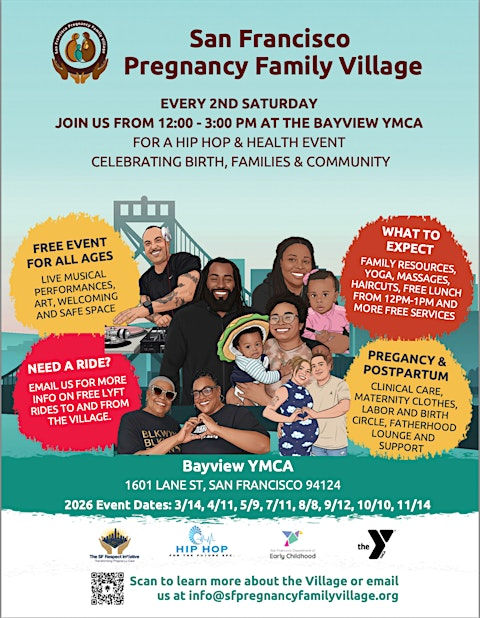
That’s the other side of the math. The people who genuinely want to help become part of something real. Their support allows us to pay artists, create jobs, and produce events that are completely free for the communities they serve. That’s how we’ve been able to produce nine public health events with the Pregnancy Village and 73 weekly open-mic and rap-writing contests without charging our community to participate.
It’s not the math most people expect.
What the “Scam” Actually Looks Like

Khafre on Fox2 News Promoting D.R.I.P. Fest. HHFTF's premier public health event.
One of the most powerful things about grassroots organizing is that it creates connections that people from communities like mine rarely have access to otherwise. I didn’t grow up knowing doctors, lawyers, venture capitalists, or CEOs. Those people are not randomly walking through the neighborhoods where I grew up. But when you spend years standing in public spaces speaking honestly about your work, something remarkable starts to happen. The worlds that normally never collide begin to meet each other. Through these conversations, I’ve shaken hands with thousands of people, and some of those moments have become relationships that change what’s possible for our work.
Some people simply donate and move on with their day. But others bring skills, networks, and opportunities that slowly become part of the ecosystem we’re building. Teachers meet us on the street and invite us into their classrooms, where our workshops inspire students who might otherwise never see themselves reflected in education. Those interactions lead to programs that pay artists to teach their craft and expose young people to Hip Hop in ways that affirm their creativity rather than stereotype it. Other supporters connect us with professional services, partnerships, and opportunities that our communities rarely have access to because the social worlds they occupy and the worlds we come from almost never overlap. Grassroots organizing builds bridges between those spaces. It introduces storytellers to institutions that have resources but lack cultural connection, and it allows those resources to reach communities in ways they otherwise never would.
One of the people I met through this work was Lisa. After a short conversation, she offered to help me clean up our books so we could prepare our taxes properly. She volunteered her time with incredible care and generosity, and when we finally sat down and reviewed everything together, I realized something that surprised even me. In a year when the organization raised hundreds of thousands of dollars and built programs that employ people and serve the community, I had paid myself only about $14,000. That number makes sense when you understand the choices behind it, but it also exposes the reality critics like Erica Sandberg never see when they casually accuse grassroots organizers of being scams.
At the beginning of last year, I was faced with a decision that would shape the future of our work. I had the opportunity to secure a venue for free, allowing us to begin hosting a weekly Hip Hop event for the community. Taking that opportunity meant something very real: I would have to stop paying myself a proper salary and commit to working seven days a week for at least a year while building that event from nothing. The alternative was simple. I could continue paying myself well and operate the organization more comfortably. But by that point, the Bay Area had already lost every weekly Hip Hop space that once nurtured emerging artists, and I knew that if we didn’t create one ourselves, it simply wouldn’t exist.

Berkeley Side Article on Flow Lounge
So I chose the harder path. I chose to make peace with a year of working harder than I ever had before in order to create something the community deserved. I chose to build an event that would set a precedent and give people a reason to support the culture through predictable monthly donations instead of occasional charity. That decision meant sacrificing my own income for a year while building a foundation that could support artists, staff, and community programming long-term. It meant trusting that if we built something real, people would eventually see its value.
And they did.
Today, we have roughly $6,300 in monthly donor support helping sustain weekly Hip Hop gatherings in Berkeley and public health events in Hunters Point. That support allows us to pay artists, employ staff, and produce cultural programming that our community can attend for free. The model works, but it isn’t finished yet. While critics on the internet speculate about scams because they saw me eating ramen with my coworkers after a long day of work, the reality is much simpler and much less dramatic. We are building something real, and we are close to fully stabilizing it.

Artist performing at Flow Lounge
To get there, we still need about two hundred more people willing to support this work monthly. Those supporters would allow us to secure the future of these spaces and continue expanding opportunities for artists and community members who deserve them. That’s the actual story behind the work—one built on sacrifice, relationships, and a belief that culture deserves the same infrastructure and support as any other system that sustains community life.
Meanwhile, I’ll still be standing outside eight hours a day asking people for two minutes. Not because I enjoy confrontation, and not because I’m trying to prove a point to critics, but because grassroots organizing remains one of the few ways someone like me can build the connections, resources, and partnerships needed to create something lasting for the culture that raised me.